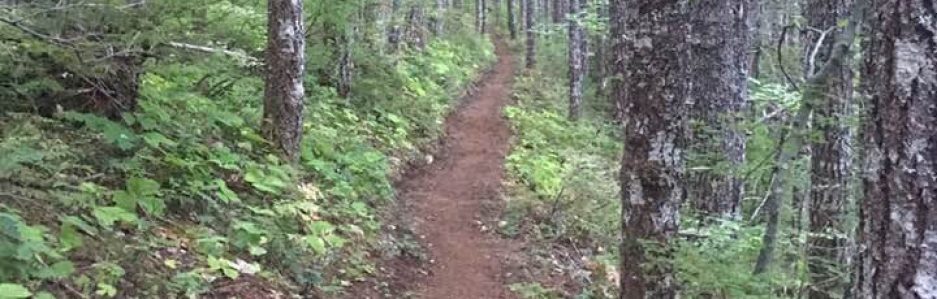
As soon as I learned I’d be attending training in Wenatchee that ended at noon on a Friday, I began planning a hiking trip for that weekend. I made some ambitious plans, but after reflecting on my current fitness level and the lingering after-effects of my most recent bout of COVID-19, I decided to stick with a familiar trail: the PCT between Stampede Pass and Tacoma Pass.
I’ve hiked this stretch a few times, and I have a definite love/hate relationship with it. I’ve hiked about half the PCT in Washington – the easy parts – and this bit is the hardest eleven miles I’ve covered. The first few miles south of Stampede Pass are gentle, then there’s a short, steep descent that lets you know what the next nine miles are going to be like. There aren’t long climbs or descents that are 5-6 miles long, but it’s an almost constant up & down. And because it’s an out & back, the steep descents are the steep climbs you did yesterday, and now your legs are tired. This is my “workout” hike, and it’s also a test. When I can do the 21-mile round trip in one day with a 25-pound pack, I’ll believe my body is ready to handle longer trips that’ll require averaging 15-mile days. (The two trips I have in my sight that’ll require that are Washington’s Section K – Stevens Pass to High Bridge (Stehekin) and doing all of Oregon in one trip.)
It’s also a good hike because it’s fairly easy to get to (less than three hours, most of the trip on interstate highways). The max elevation is below 5,000′, so it’s likely to melt out relatively early in the season. There’re a few reliable sources of water along the route, and half a mile south of Tacoma Pass is a stream that runs in even the driest years. There are ample places to camp both on the ground and in hammock.
This section lacks soaring views and beautiful scenery, but I took a couple of my favorite trail photos during a hike in this section. It can seem like you’re crossing a road or an old road bed every half mile. This section has an industrial feel in places. But it’s still a trail, and it was just what I needed that weekend.
As is my usual practice, I got to the trailhead later than I’d hoped. When I arrived, there was a trail angel set up at Stampede Pass. It’s a good spot for trail magic because pretty much any passenger vehicle can get there. It’s eighteen miles from Snoqualmie Pass, so it’s likely any hiker is only about a day away from Snoqualmie Pass. But hikers almost never turn down an ice cold beverage or a food that doesn’t need to be rehydrated. While I was getting ready to head out, three NOBOs stopped by. It was almost 4:00 p.m. by the time I left. That left me with only about three hours of daylight*, but I really only needed to get a few miles in the first day.
* In the mountains, daylight often fades before sunset. In this case, there are ridges to the west of where I was hiking; once the sun drops behind them it’s noticeably less bright. As a general rule, I like to start looking for camp about an hour before sunset, and I want my camp set up before dark.
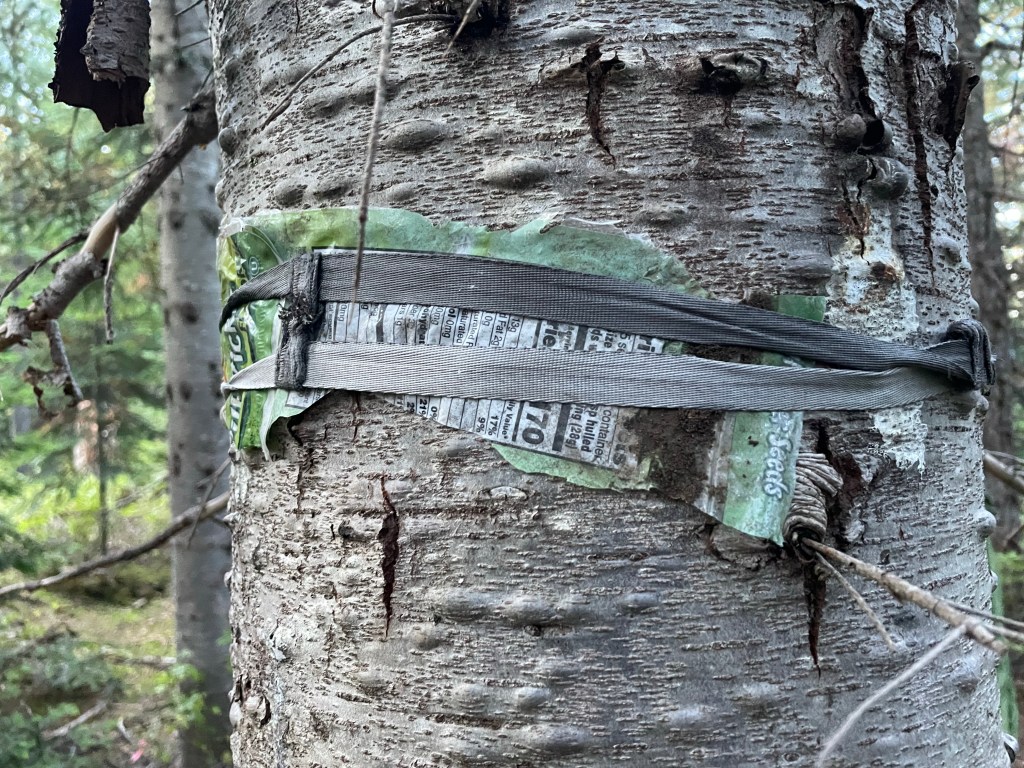
I hiked about three miles on Friday. I found a spot along the trail that worked for a hammock. The types of trees – subalpine fir – are not my favorite for hanging the hammock because they’re covered in pitch pockets that burst easily, getting pitch on the straps for the hammock. I came up with a solution: earlier, I picked up a sunflower seed package that someone had discarded, and I put that between the straps and the tree. Bonus points for picking up trash!
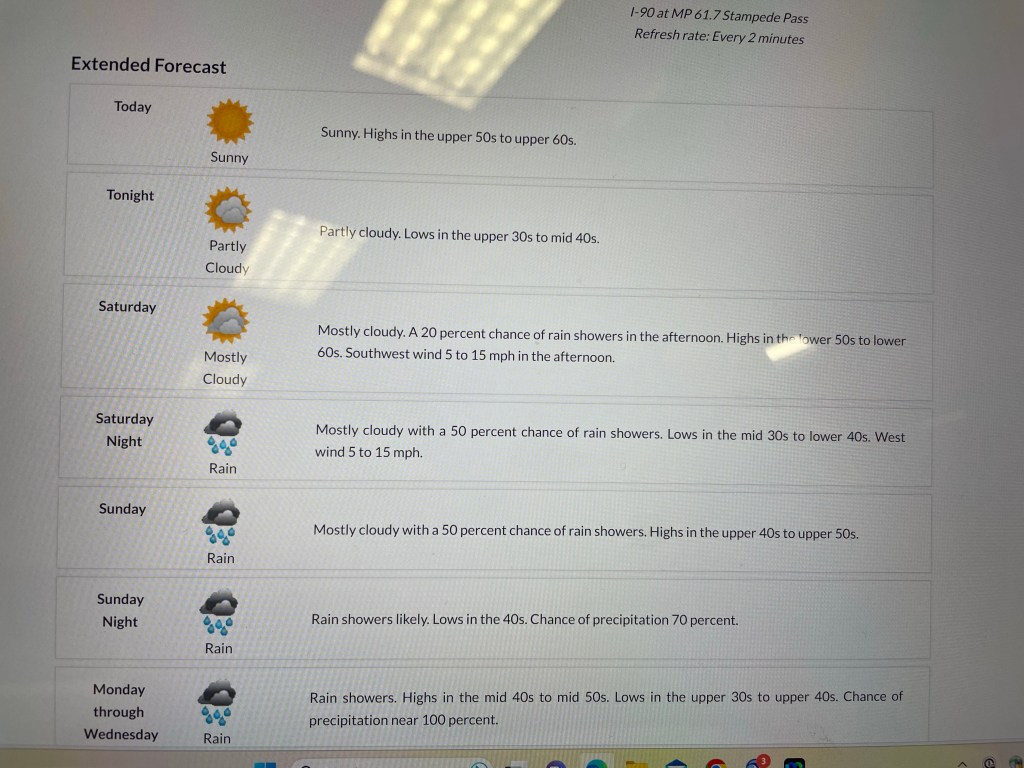
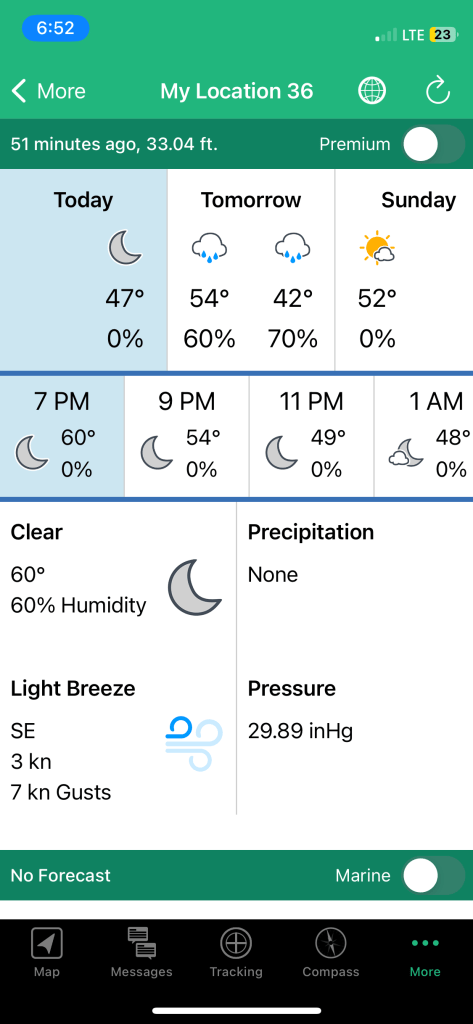
I ate my dinner, packed away all my food-related items in my bear bag & tied it off to a tree a ways away, then settled into my hammock for the night. The overnight lows were cool, and with darkness coming early it was nice wrapping myself up in my down quilt. I brought along a sleeping bag liner that’s purported to add up to 14F to the temperature of one’s sleeping bag, and I’m glad I brought it. I also brought along my down booties & covers. While I didn’t need the booties — Mom’s foot sweaters were warm enough for my always-chilly feet — I used the covers briefly when I needed to do a chore in camp. (I cannot recall why I didn’t want to put my shoes on, but I there was a definite reason.) The covers worked really well. I wouldn’t want to rely on them in lieu of camp shoes, but in a pinch they worked.

While I crawled into my hammock early I didn’t immediately go to sleep. I read for a bit, played some games on my phone, planned the next day’s hike, et cetera. I often don’t sleep well the first night or two on the trail, and I think I woke up quite a bit that night. But I slept in, and oh! that was wonderful. I didn’t get out of my hammock until almost 8:30. That meant I’d wasted a few hours of daylight, but it felt great.
I had grand plans for Saturday. Perhaps I’d hike to Tacoma Pass – roughly eight miles from my starting point – and hike the majority of the way back to Stampede Pass (about another eleven miles). That was an ambitious goal, but I figured it was worth a shot.
I knew I’d need to stop at the next place with water, and the reports were that the spring was flowing well. I was not disappointed. As is often the case, a fellow hiker had augmented the spring by strategically placing a piece of bark in the flow. This diverts the flow so that the water freefalls; this makes it easier to gather water as the water will flow freely into whatever you’re using to gather water. (This is much easier than scooping water.) I took the opportunity to eat second breakfast while I filtered water, then off I headed.


As I mentioned above, this section has a lot of road crossings, and a lot of old roadbeds. Parts of the trail are decommissioned roads, and over the decades plant life has reclaimed much of what was open space. But the old roadbeds are still flat, meaning this section has an embarrassment of riches when it comes to possible camp sites. I’m curious about a lot of these old roads, and someday I hope to spend more time exploring where they go.
My next stop was for lunch. I found a spot near what’s described as a “seasonal stream.” This campsite was bracketed by two streams with small pools from which one could gather water. I took note of this. Tacoma Pass is just three miles from here, and there’s a strongly flowing stream a half mile further south. But leaving Tacoma Pass to head back north one climbs almost steadily for the first mile. It’s not awful — it’s about a 530′ gain — but I didn’t want to do that climb carrying two liters of water if I didn’t have to. And not getting water from the stream south of Tacoma Pass meant one less mile – and 390′ fewer feet of elevation gain – I’d have to hike. Skipping the water near Tacoma Pass meant I needed to make it back to this spot before dark, so I decided to make the decision when I got to Tacoma Pass.
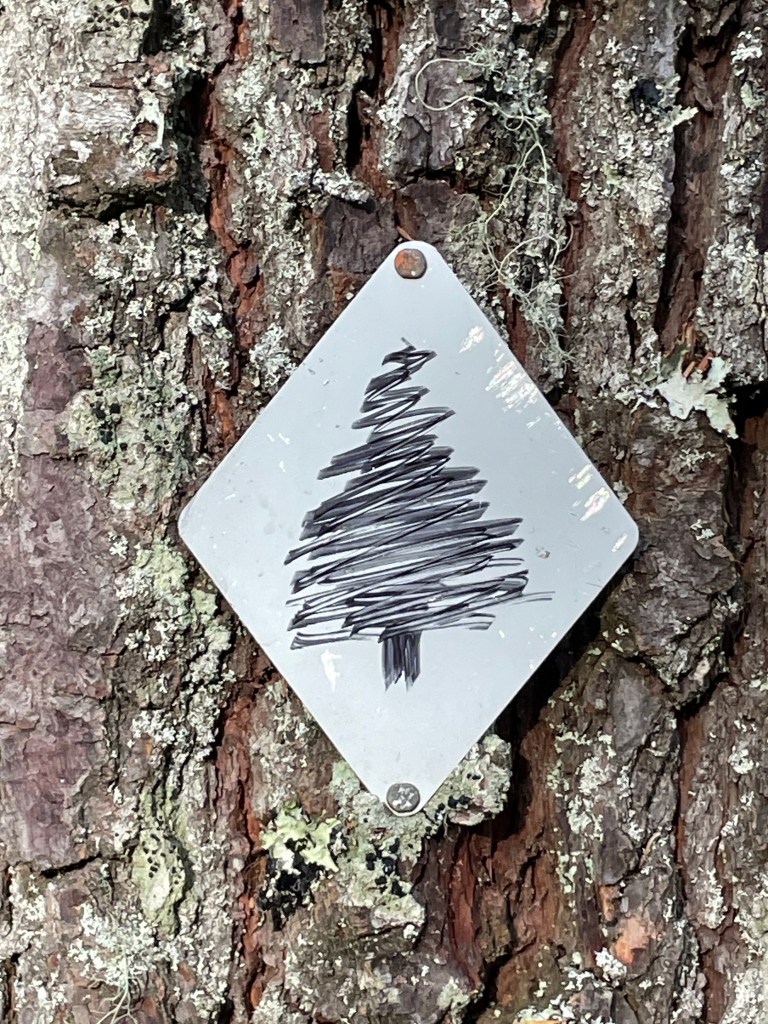
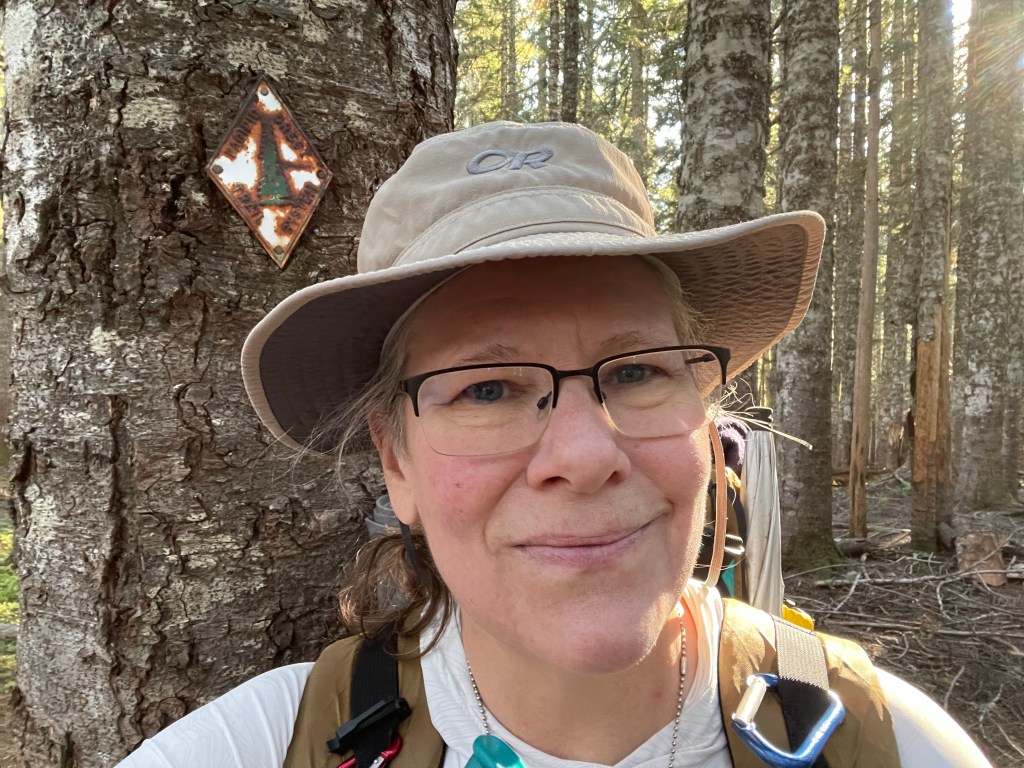
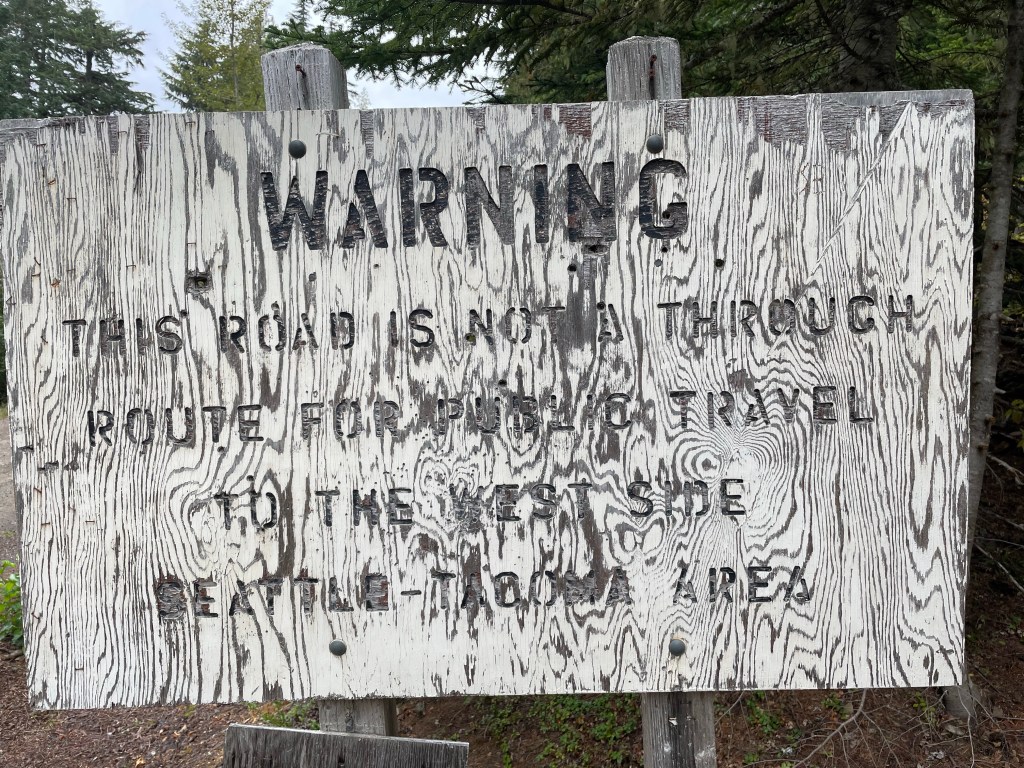
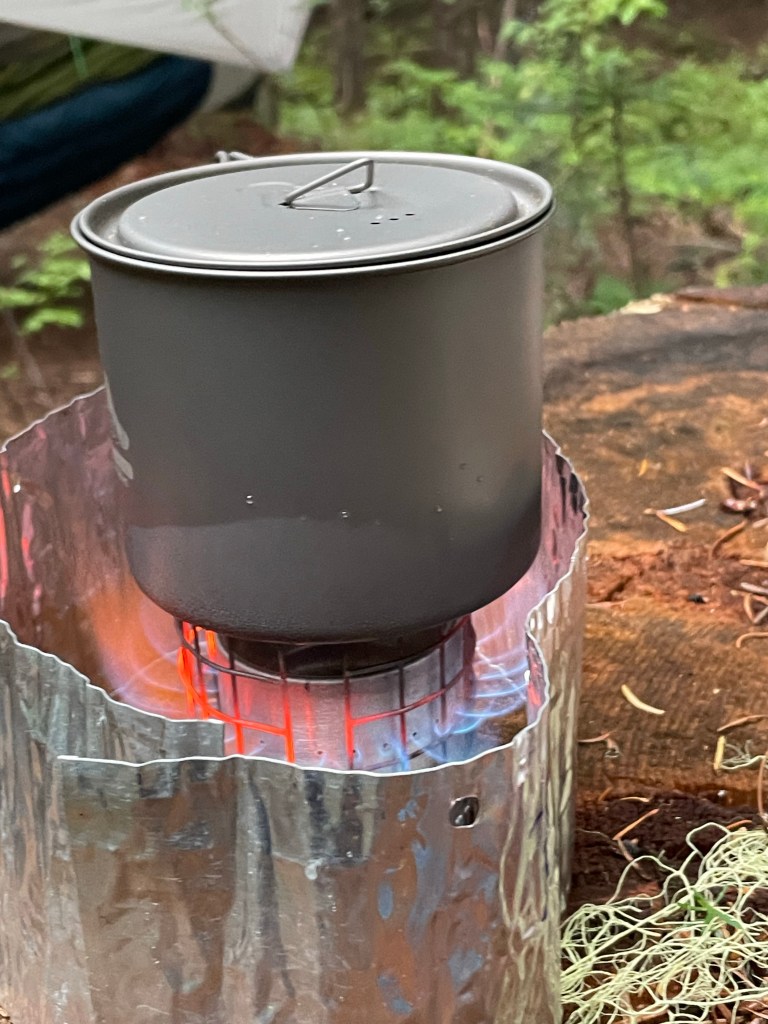
Once I got to Tacoma Pass I decided to skip gathering water there. That meant a quick turn-around and I started heading north. I returned to the spot where I ate my lunch and decided it was a fine time to make camp. The spot that I thought looked perfect was not quite perfect. The trees were just barely far enough apart for my hammock. But the campsite had this perfect large stump on which I boiled the water for my dinner, and the stump was tall enough to allow me to hang my water filter set-up so that gravity could do all the work (instead of me).
I normally cold soak my food instead of boiling water, but I figured I need to use my alcohol stove occasionally so I don’t forget its quirks. Alcohol stoves cannot be used when there’s a fire ban, and that’s most of the summer & early fall nowadays. I didn’t see any signs on the way to Stampede Pass indicating the fire ban was still in place, and this stump is fairly damp. I got to enjoy a hot meal that night.
Nights in the backcountry tend to be very quiet. In this area, that quiet is often interrupted with jet aircraft flying over, and I heard a helicopter. I woke up around four a.m. Sunday, and shortly after that I heard a sound I couldn’t identify. I was pretty sure it was a bird but that’s all I could come up with. I recorded it so that I could try to identify it once I got home. It took a bit, but I believe I was listening to a barred owl. I didn’t go back to sleep, and I got out of my hammock as soon as there a bit of light as I wanted to get on the trail and get home relatively early.


I brought along my BTR camp stool on this trip. It’s definitely a luxury item, but this trip convinced me it’s worth the extra weight in my pack. I carried it in an exterior pocket, meaning that any time I stopped I could set it up within seconds. When I stopped to gather & filter water, being able to sit while doing that was a nice treat for my feet & legs. It’s also nicer to not have to sit on the ground while eating. It was really nice having it set up under the tarp & next to my hammock. It was like a nightstand, and it gave me a place to sit while I was tying my shoes.
I got a bit of sunshine during my hike back to Stampede Pass. (It was drizzly the day before, but I never bothered to get out my umbrella. I was wearing my alpaca hoody, and while the exterior got damp I never felt any moisture. It dries really fast, too – I love these things!) I was able to see some views that weren’t visible the day before. As I said, there aren’t glorious, soaring views in this section, but there are spots where you can see what looks like the entire Green River Watershed. And there are always little things that catch my eye.

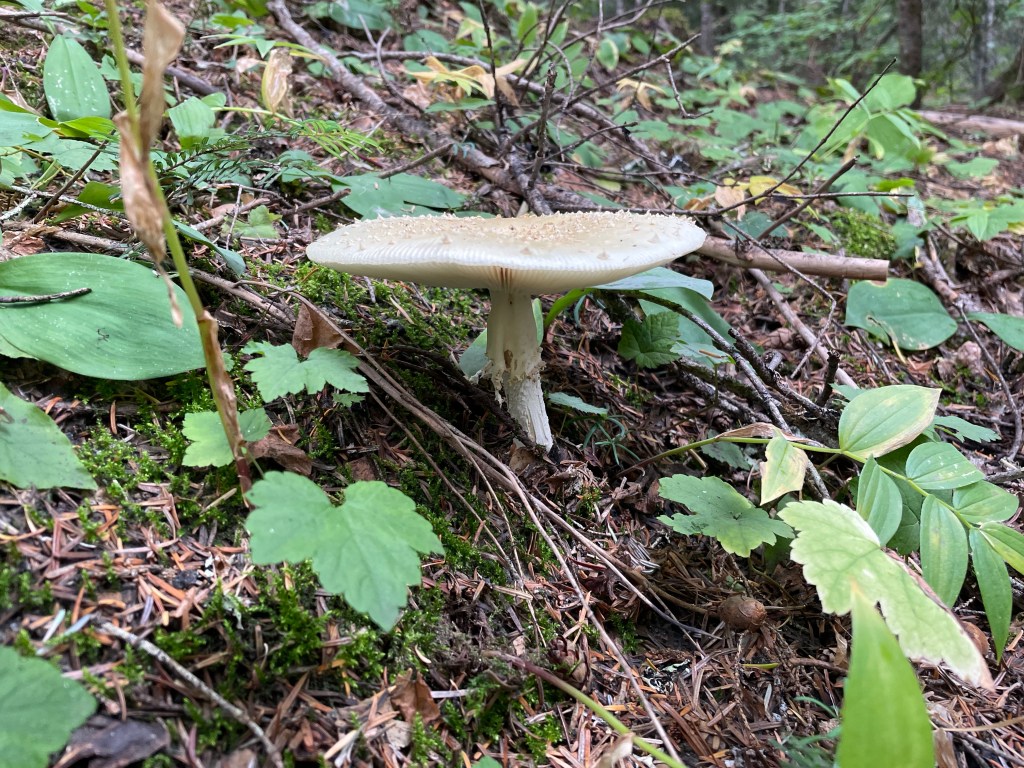

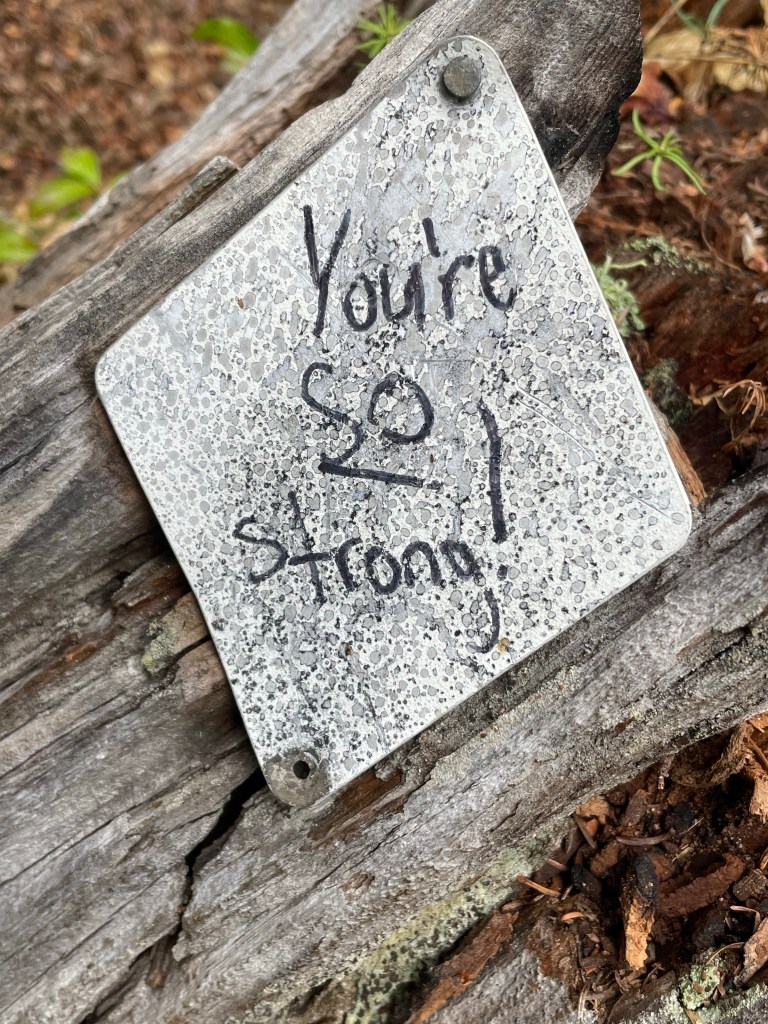
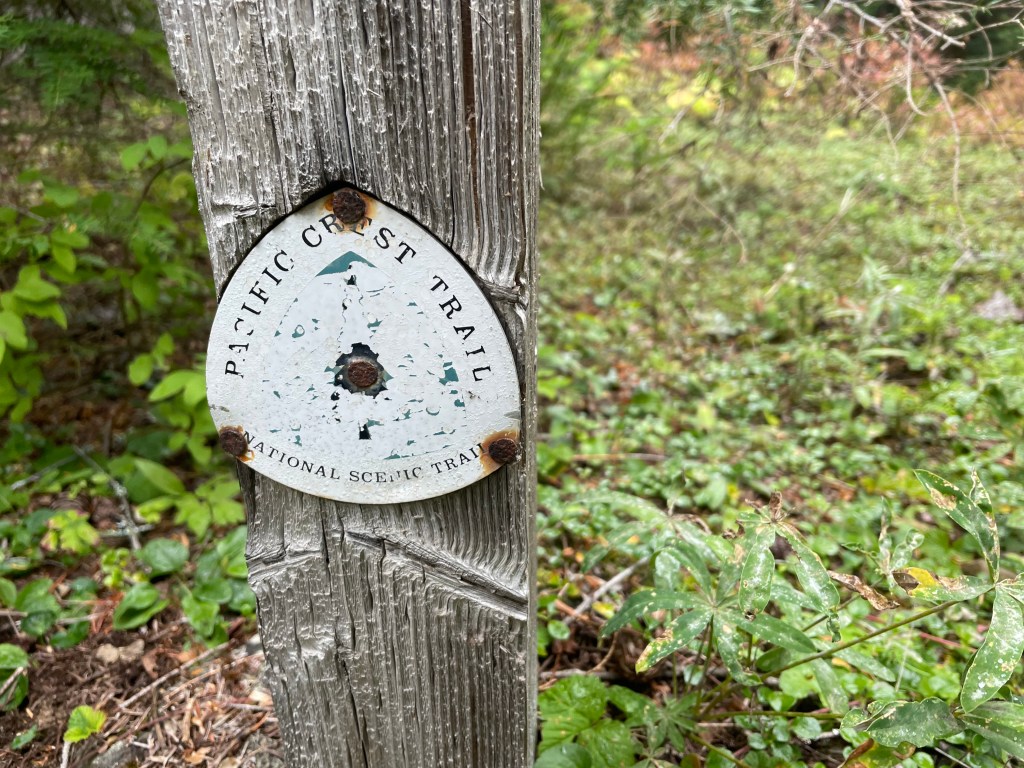
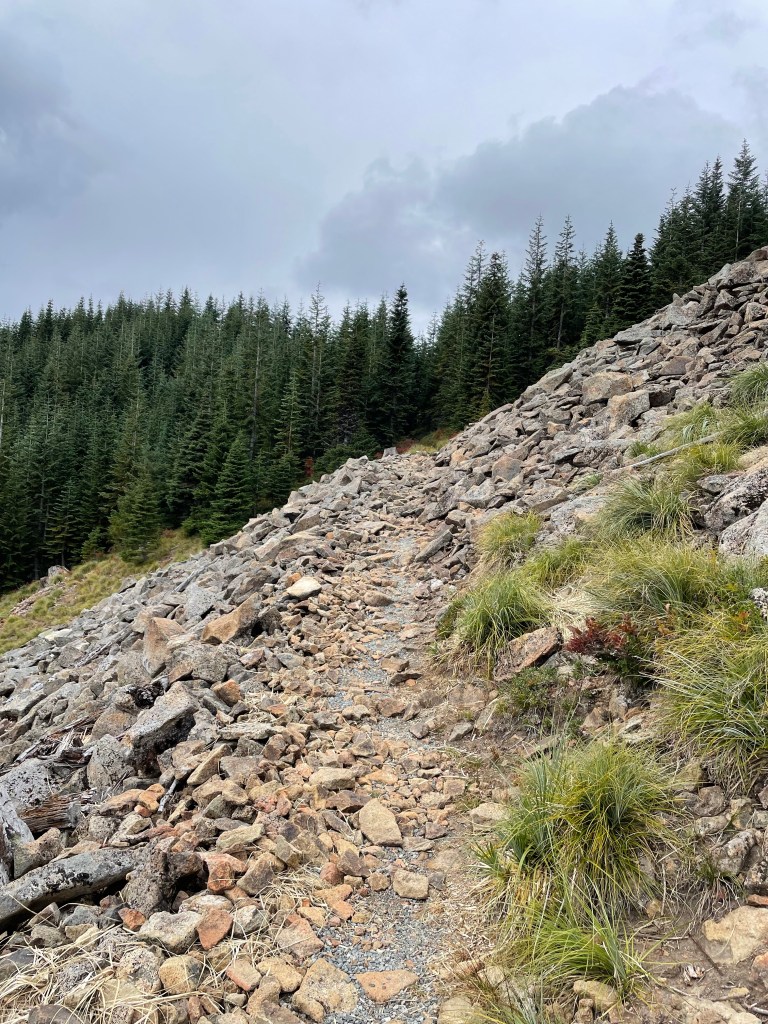


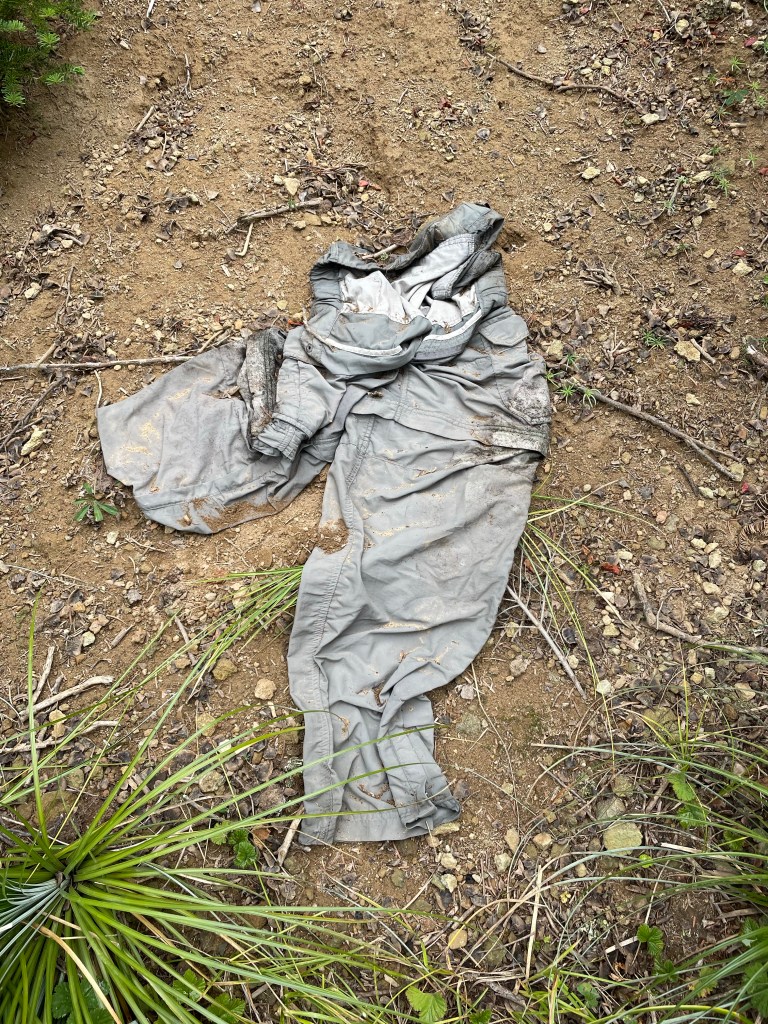
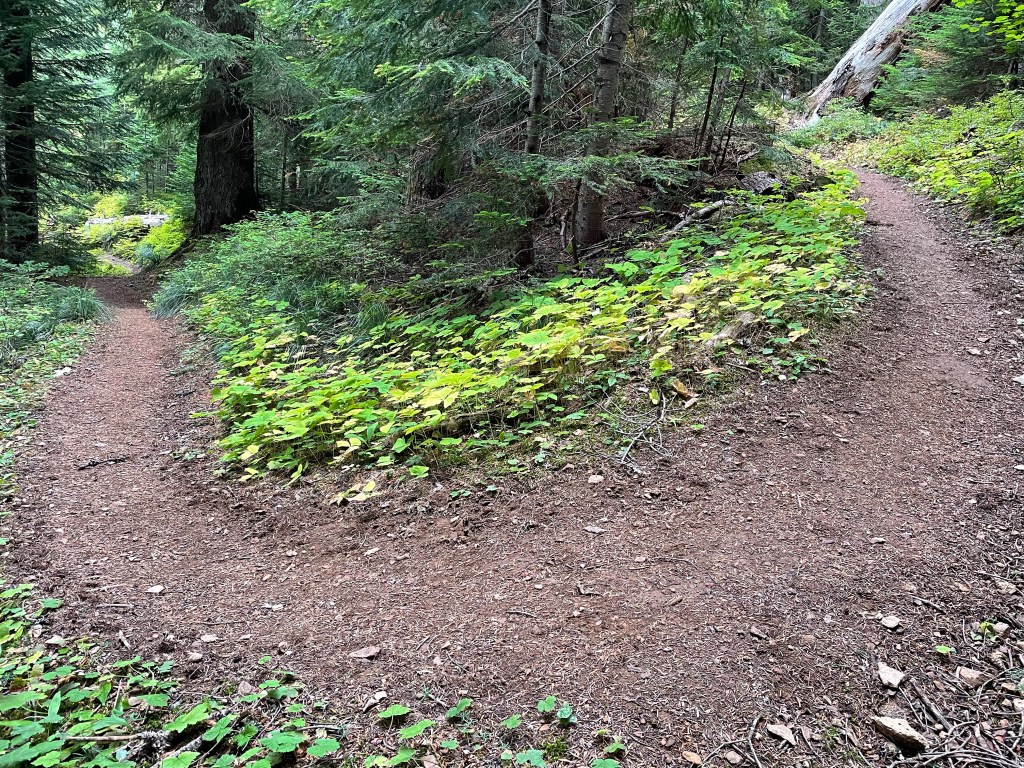
Unless there’s another weekend this fall with mild weather, it’s unlikely I’ll be able to get out to do this hike again this year. I wish I could be out there right now, but I will just have to be patient. This trip was time well spent, and I’m glad I went. I hold on to the memories from my hikes — it’s what keeps me going until the next time. Next time I do this section, I plan to bring a tent instead of the hammock. I think that’ll give me more options for places to camp. I love the hammock, but just as with the stove I need to use my tent now & then so that I don’t forget how to set it up.
 hillslug98239